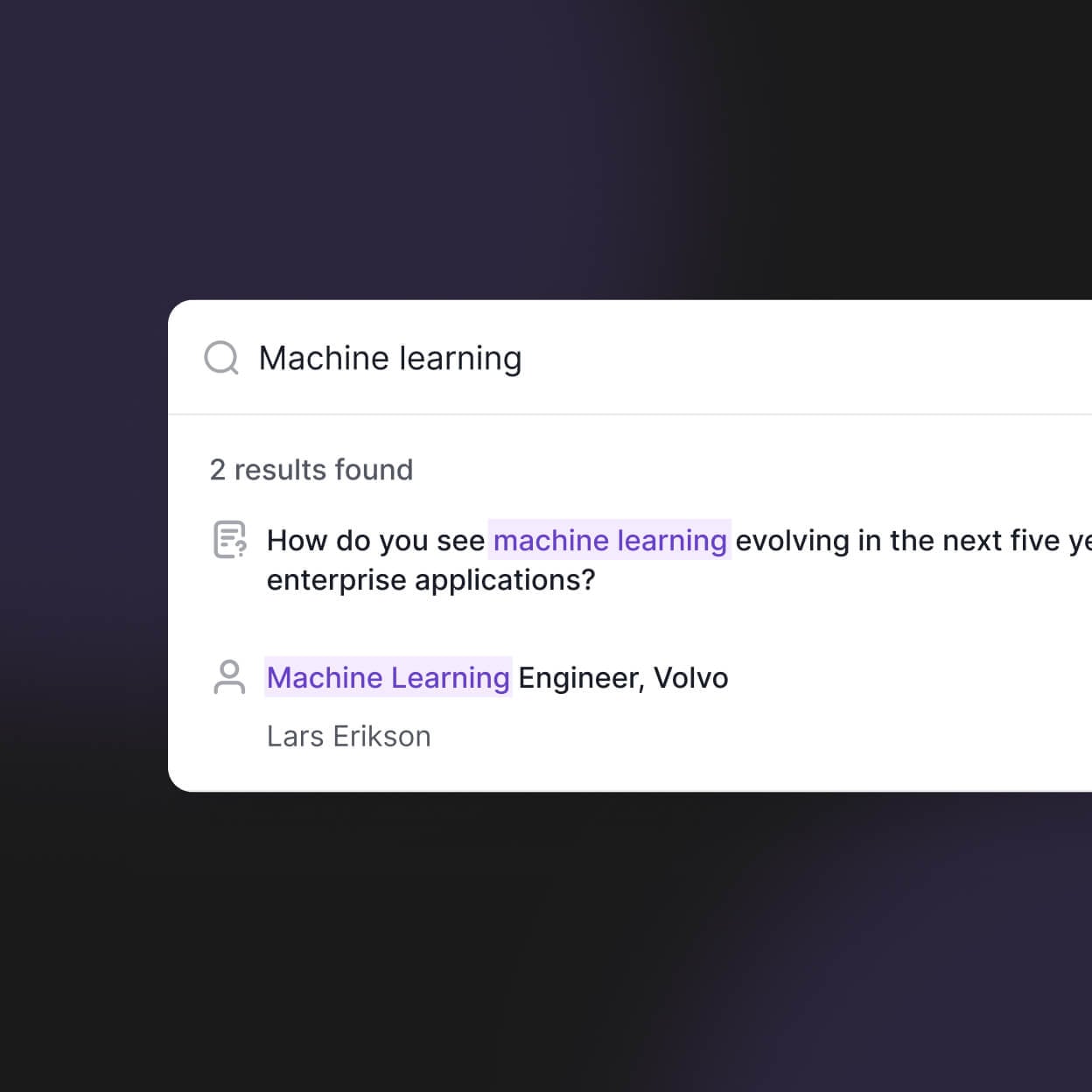
From Funding to Interface
Synquery's AI agents can autonomously source experts, schedule interviews, and synthesize insights in hours instead of weeks. But when they secured funding, the technology existed without a face. The team needed a complete product design partner who could translate complex autonomous workflows into something a consulting analyst could use without a manual.
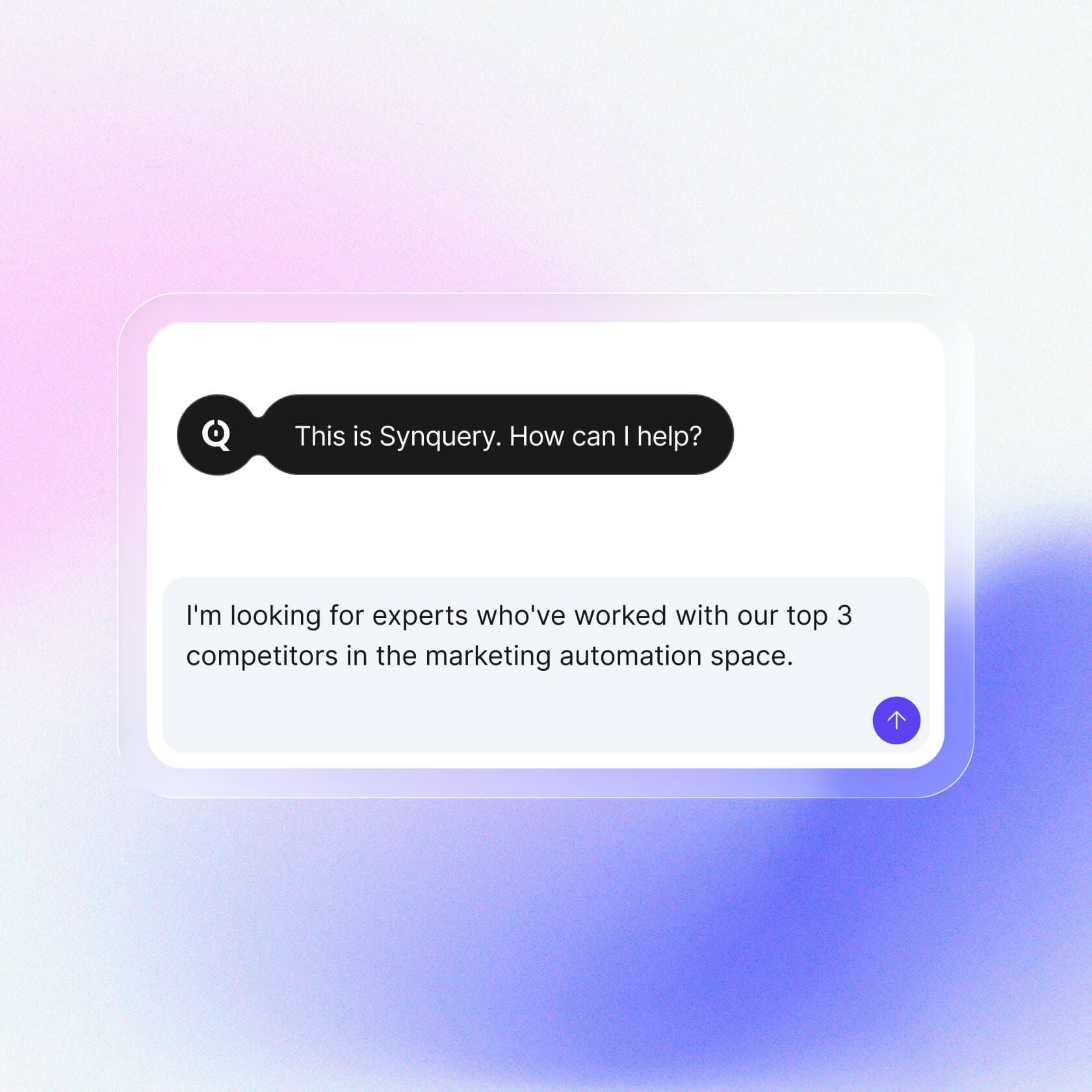
We worked closely with their team to map every user touchpoint, from submitting a research question to reviewing synthesized findings, and designed an experience that makes AI-powered research feel effortless.
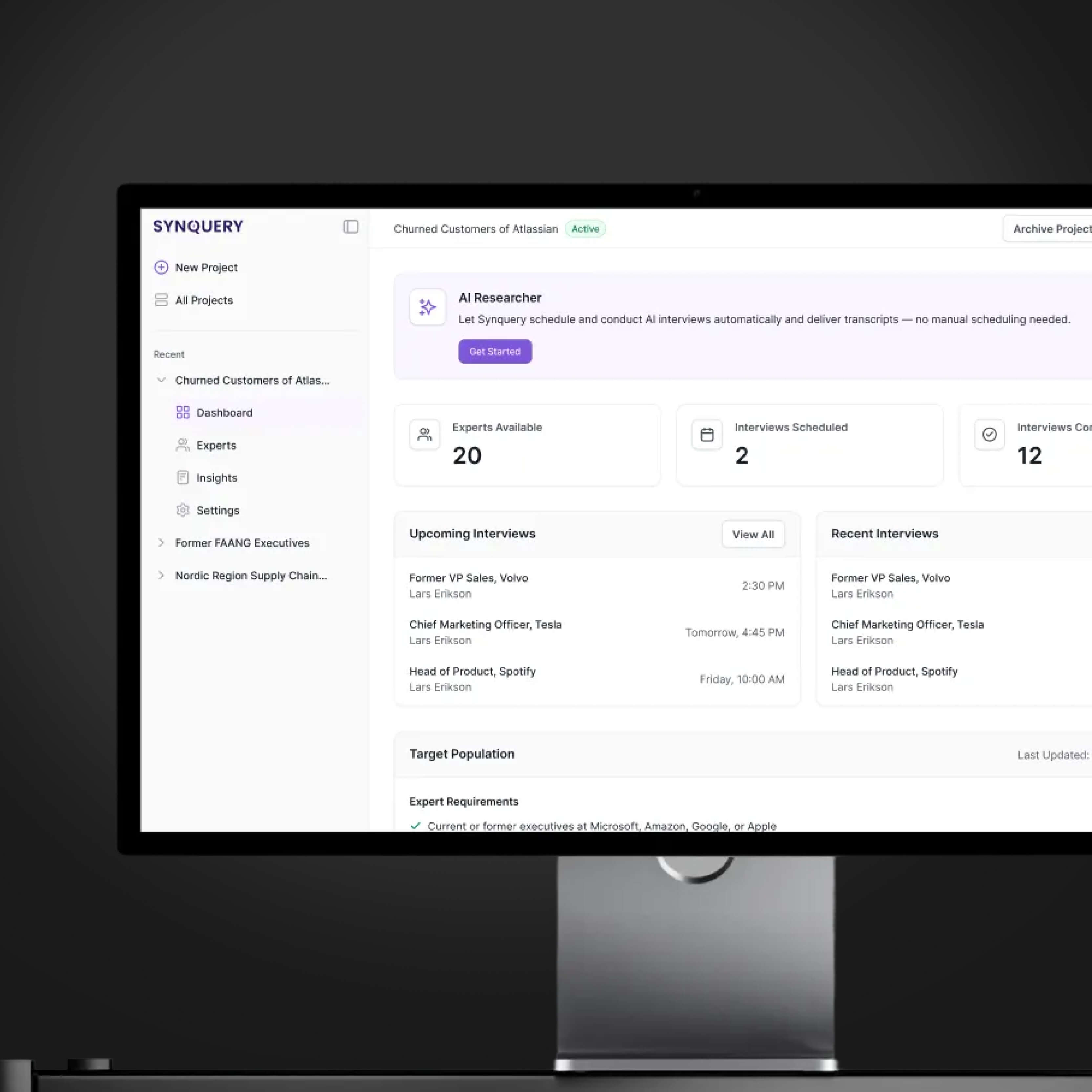
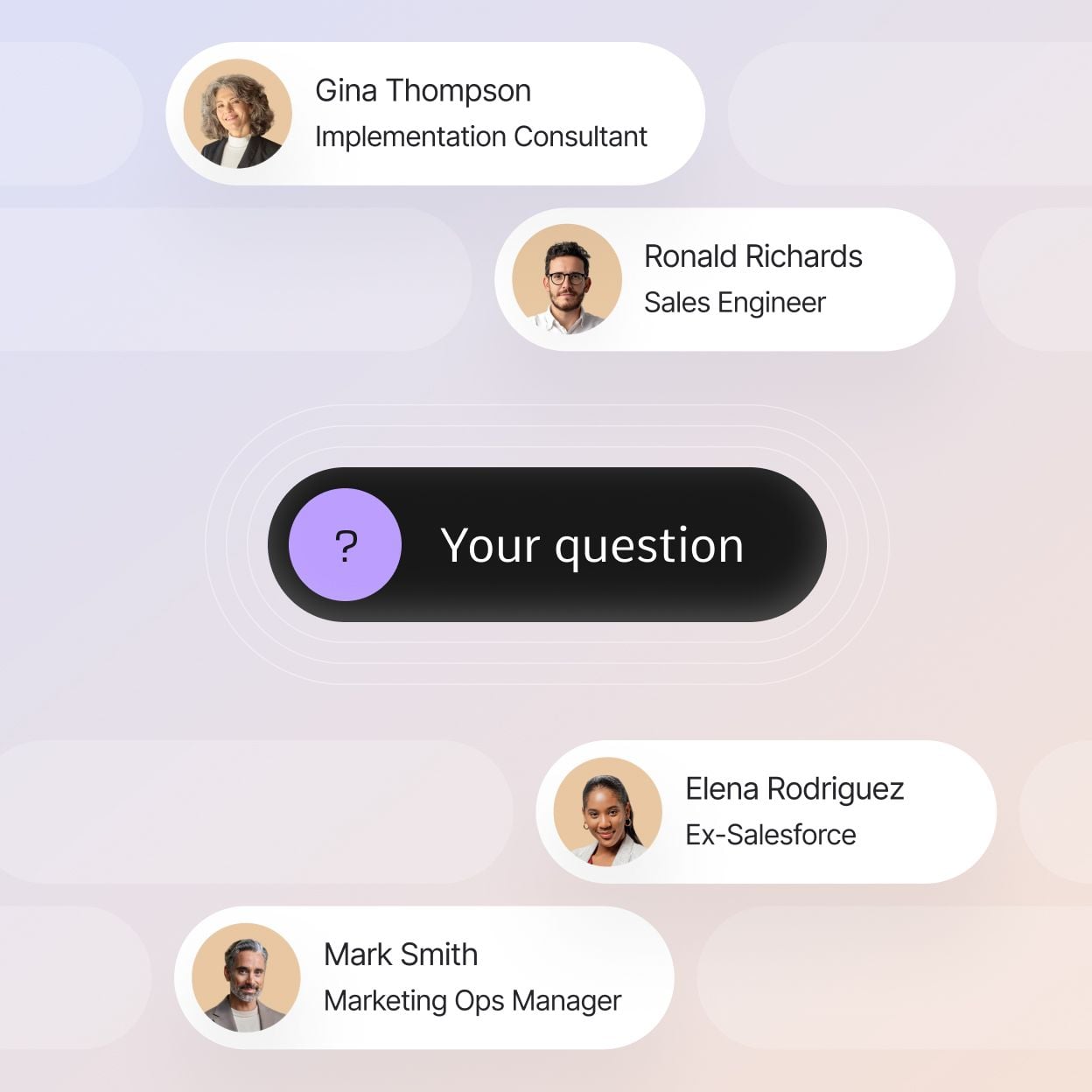
Making Complexity Disappear
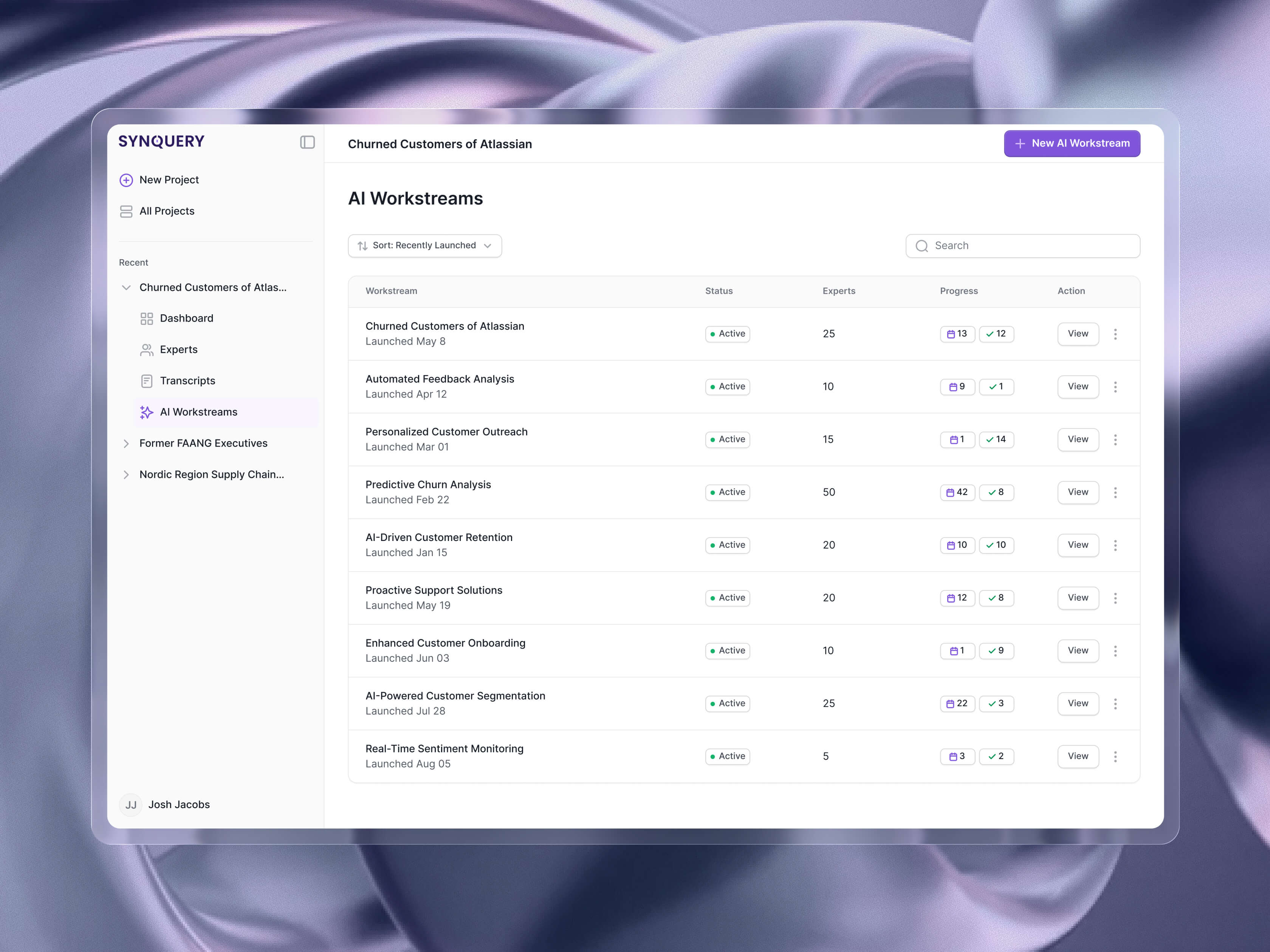
The core design challenge was visibility without overwhelm. Users need to trust that AI agents are working autonomously, sourcing experts, vetting credentials and conducting interviews, while retaining the ability to monitor and intervene.
We created a layered interface that surfaces progress and key milestones at a glance, with deeper detail available on demand. The result is a dashboard that feels calm and focused even when dozens of AI-driven interviews are running simultaneously behind the scenes.
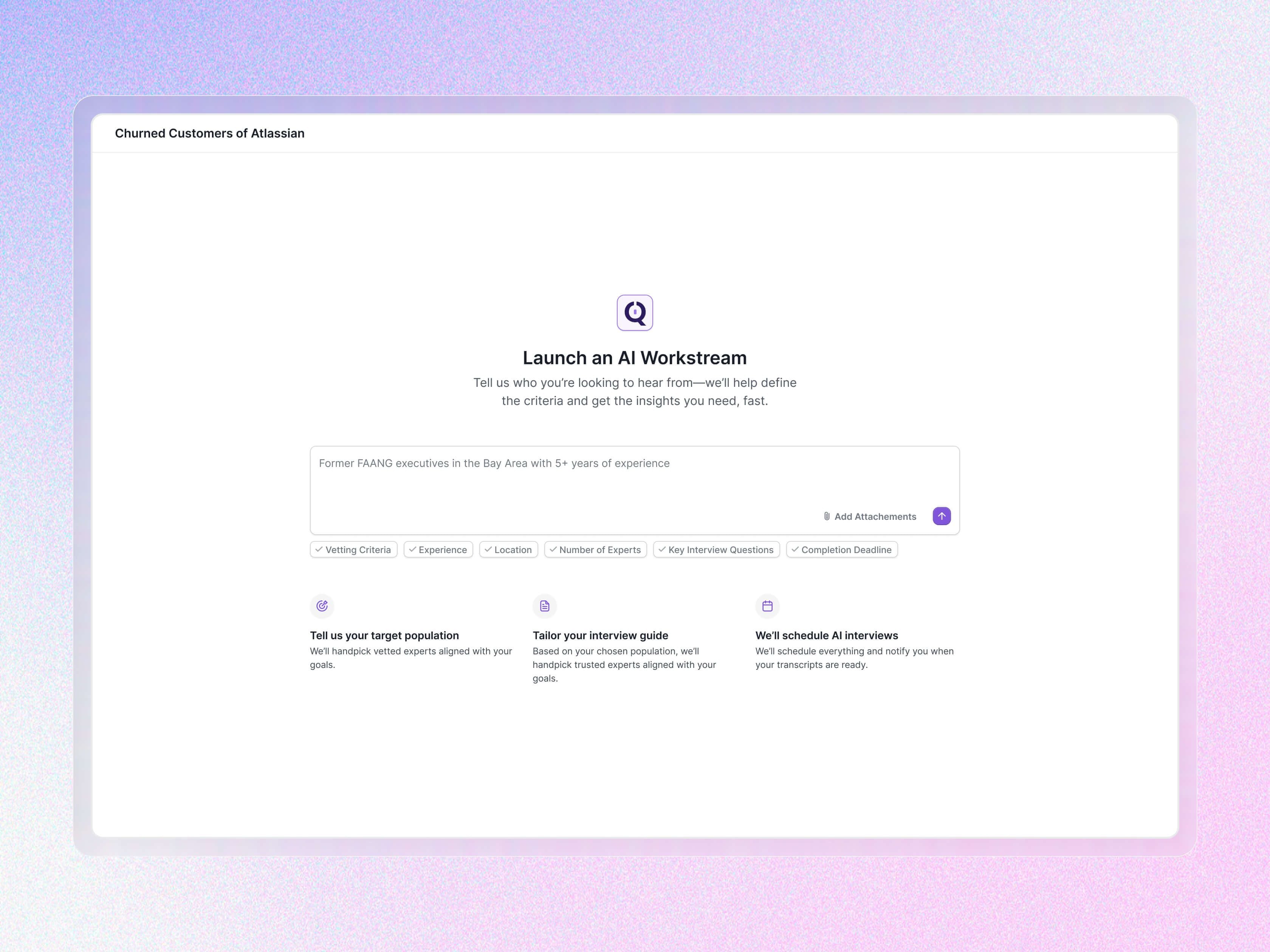
A System Built to Scale
Beyond individual screens, we delivered a cohesive visual design system built for Synquery's rapid growth. Every component, from project cards to insight summaries to expert profiles, follows a consistent visual language rooted in clarity and restraint.
The design scales gracefully whether a user is managing a single research sprint or overseeing a portfolio of concurrent projects, giving Synquery a product presence that matches the sophistication of their technology.
The Marketing Site, Built Alongside It
A product this new needs a front door. While the app took shape, we designed and built Synquery's marketing website in Framer alongside it, using the same visual system, so the story a prospect reads and the product they sign up for feel like one company rather than two.
Running both tracks at once meant decisions carried across immediately. A component solved for the dashboard showed up on the website the same week, and the language the marketing site uses to explain autonomous research is the language the product uses in the interface.